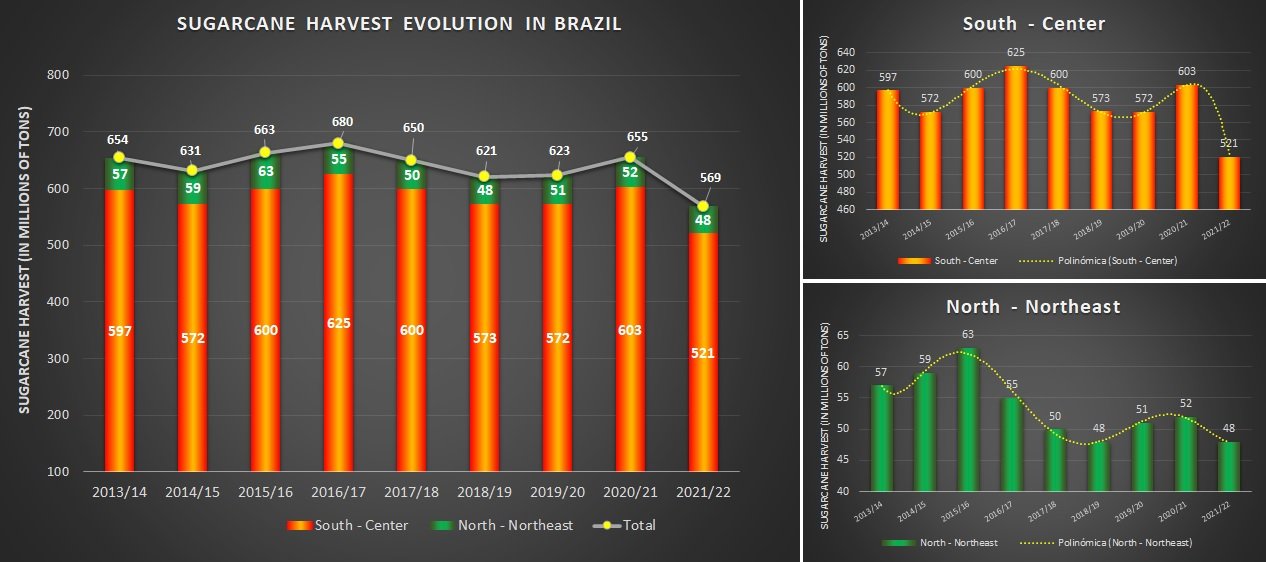
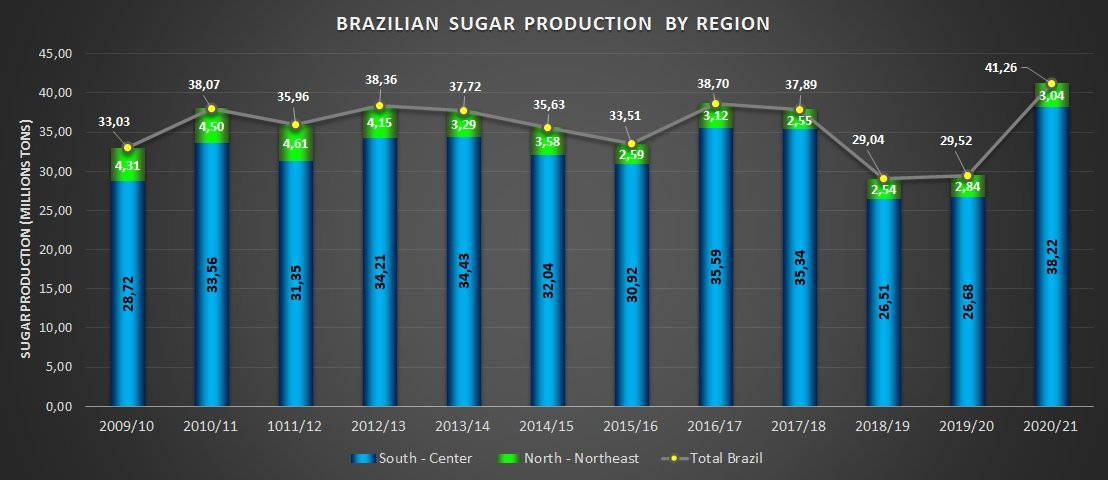
Brazil is the world’s largest producer of sugarcane and, in the 2020/21 harvest, was responsible for the production of 654.5 million tons for the production of 41.2 million tons of sugar and 29.7 billion liters of ethanol1. The State of São Paulo, which leads production in the country, accounted for 54.1% of the amount produced in the 2020/21 harvest, and was responsible for the production of 48.4% of ethanol (14.3 billion liters) and 63 .2% of sugar (26.0 million tons). The sugar-energy complex, sugar and ethanol, occupies a prominent role in the export agenda, and in 2020 the sector had a national share of 9.9% (US$9.9 billion), the fourth most representative sector in the country. Of the total national value exported, sugar represented 87.8%, and was the most representative sector in the State of São Paulo, with a share of 37.1% (US$6.4 billion)..
Harvest Sugar Cane
In the 2020/21 harvest, world sugar production was 179.9 million tons, and Brazilian production represented 22% of the total produced; for the 2021/22 harvest, production is estimated at 186 million tons.
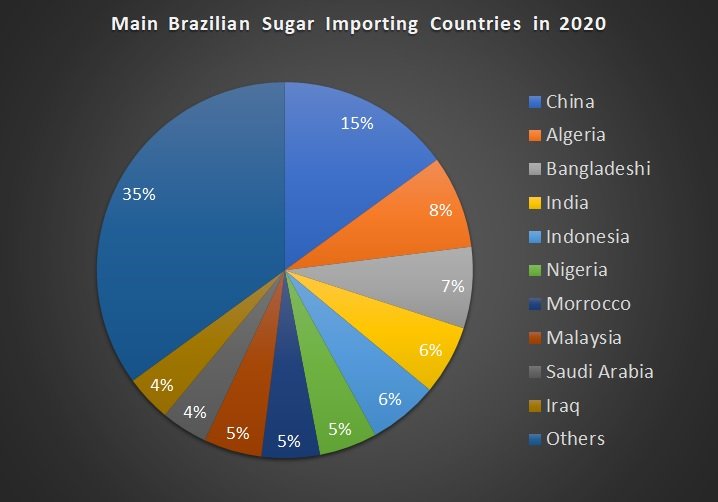
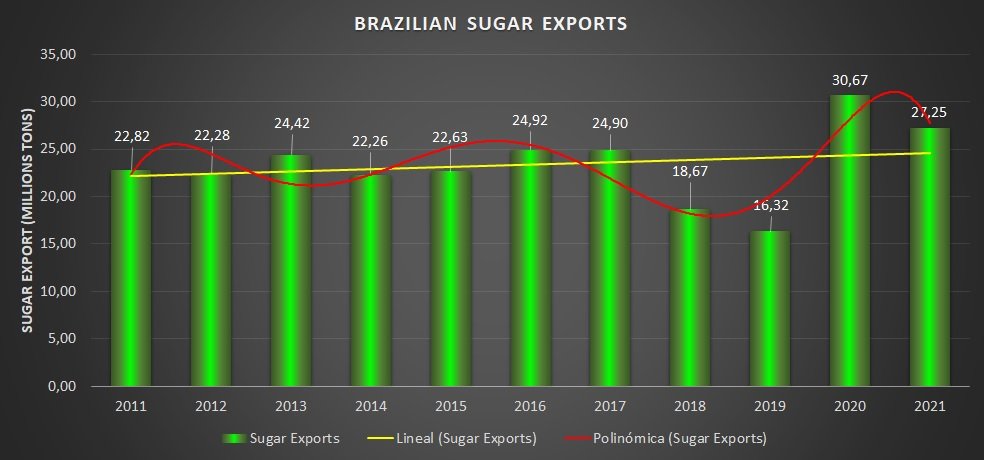
The favorable scenario of sugar prices in the international market, the lower production of the sweetener in the main world producers, in addition to the pandemic, were factors that contributed to the increase in external demand in 2020. The country was responsible for the export of 30.7 million sugars. tons of sugar, 1.1 times more than exported in 20196. Of the total exported, 65% was sold to China, Algeria, Bangladesh, India, Indonesia, Nigeria, Morocco, Malaysia, Saudi Arabia and Iraq
The port of Santos is the main port for shipping sugar in the country and, in 2020, 23.9 million tons of sugar were shipped to other countries, 77.6% of the total volume exported.
São Paulo concentrates the largest sugar production in the world
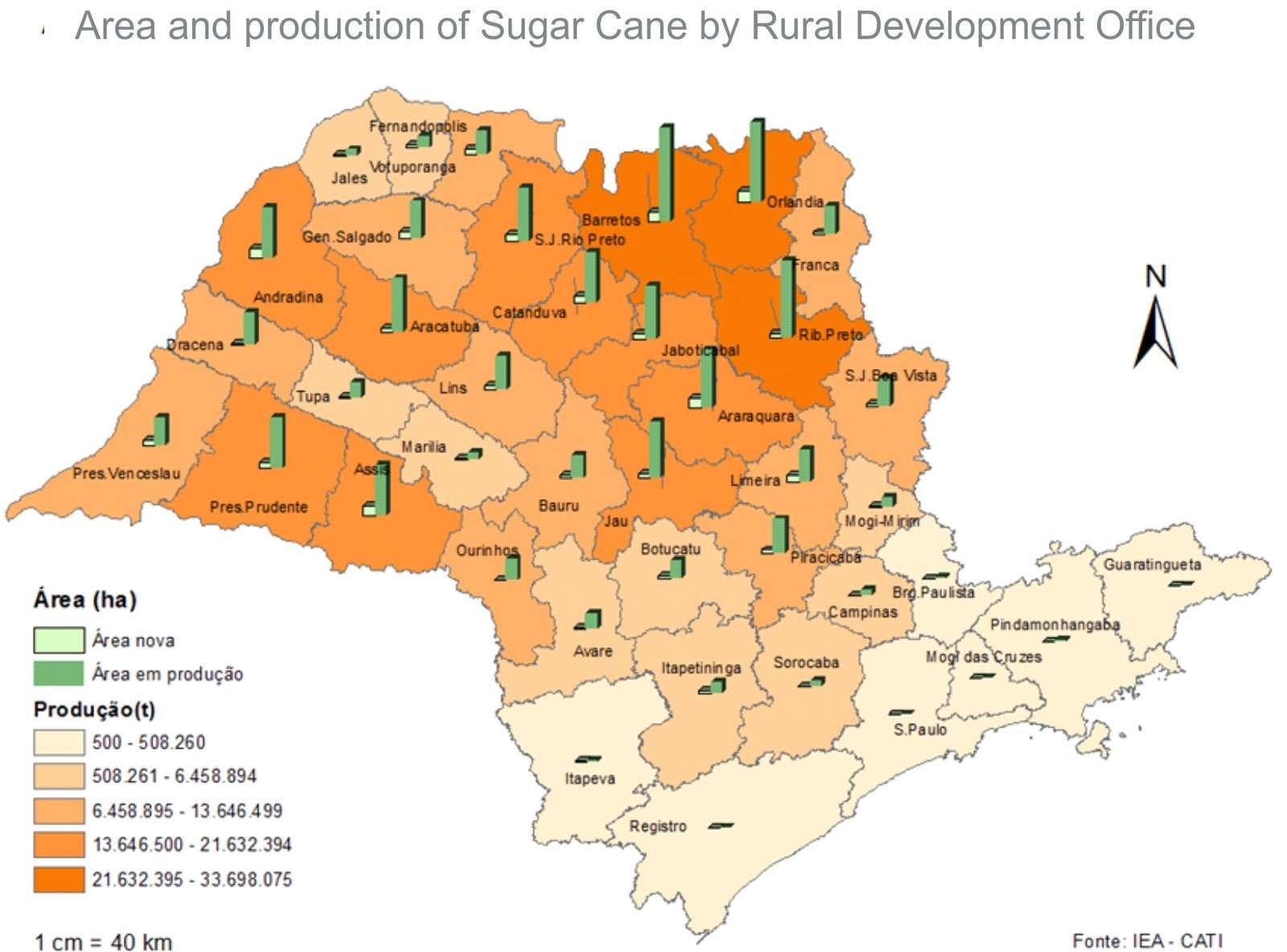
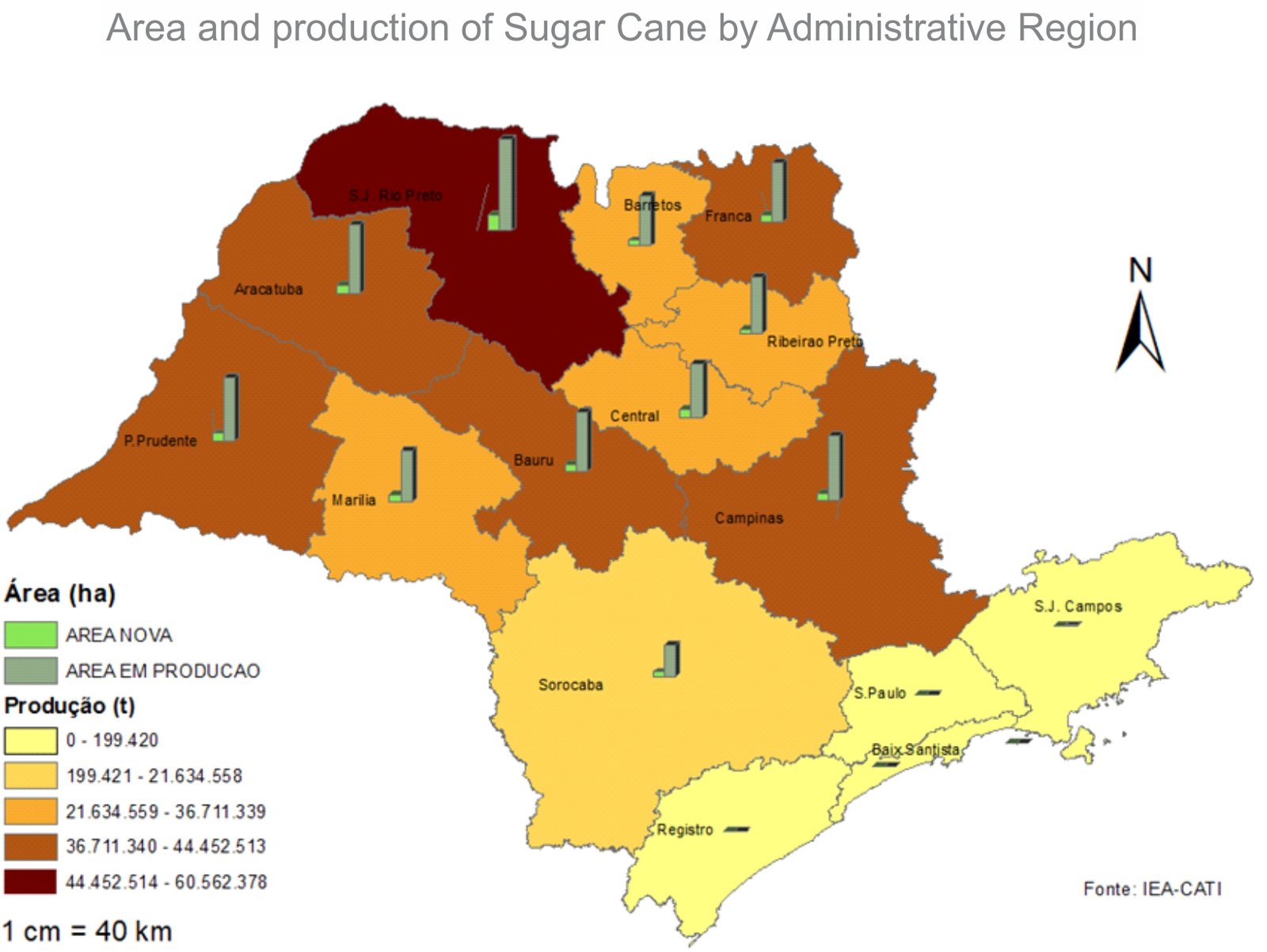
In the State of São Paulo, sugarcane is the main product of São Paulo agriculture, the crop occupies approximately 5.88 million ha in the state, approximately 100 thousand Units of Agricultural Production (UPAs), and the largest producing regions are the Rural Development Offices (RERs) of Barretos, Orlândia and Ribeirão Preto.
According to data from the Sugarcane Production Monitoring System of the Ministry of Agriculture, Livestock and Food Supply, 41.7% of the sugar and alcohol producing plants are located in the State of São Paulo.
The 172 mills installed in the state corresponded to 42% of the Brazilian total and were responsible for 56% of the sugarcane crushed nationally in the 2020/2021 harvest, according to UNICA, Sugarcane Industry Union. They produce much of the ethanol used in flex-fuel automobiles that circulate in Brazil. A revolution in the domestic auto market, bi-fuel cars were launched in 2003, with engines capable of running on hydrated ethanol, gasoline, or blend of the two in any ratio. In addition to benefiting the planet by reducing the emission of carbon dioxide, drivers have the option of choosing the most economical fuel when it comes to fueling. São Paulo is also a major sugar producer. In 2020/21 harvest, in the São Paulo mills, 23.8 million tons of sugar were produced, corresponding to 14% of the total produced in the world. This puts the state ahead of producers such as India (13%), the European Union (10%), Thailand (6%), China (6%) and the United States (5%). Leadership translated into international trade. The producers from São Paulo exported US $ 6.9 billion in 2021. The indispensable item in the coffee of many people around the globe accounted for 38.6% of São Paulo’s agribusiness exports.